
Stage 01
Per-sheet extraction
Symbols, tags, and lines parsed sheet by sheet.
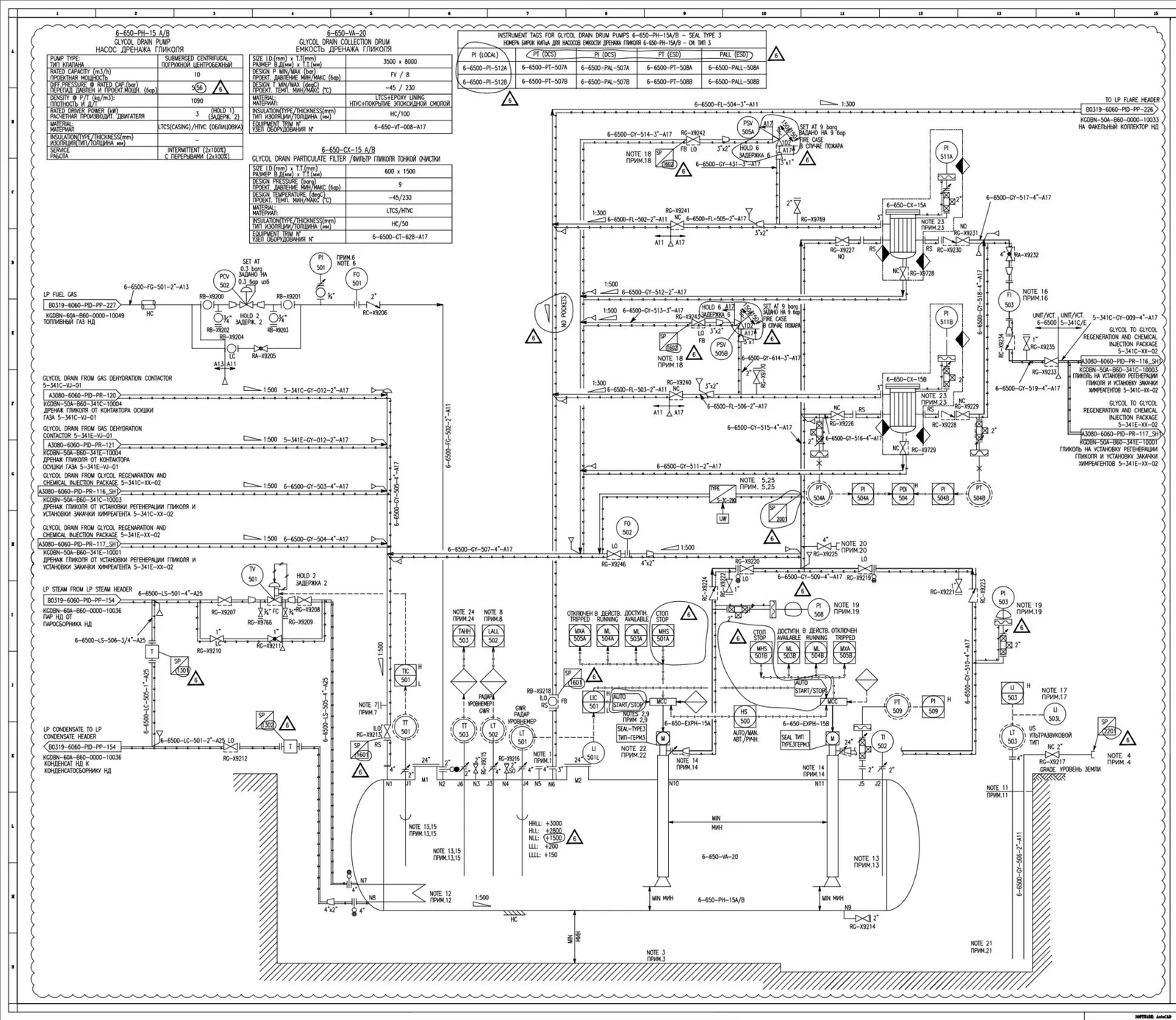
Equipment, lines, instruments, and connectors are identified at symbol level, with every extraction tied to a specific source region.

Vessels, columns, exchangers, drums, pumps, compressors, and packages — identified, classified, and linked to their source region.
Line number, size, spec, service, and routing resolved against the facility’s numbering convention.
Transmitters, indicators, switches, controllers, analyzers, loop tags, and signal connections.
Control valves, isolation valves, relief devices, actuators, setpoints, and the systems they protect.
Every tag, callout, note, and revision cloud retained with its drawing position for auditability.
Off-sheet references paired across the complete drawing set and resolved into directional facility connections.
Drawing number, revision, sheet, project, area, and unit used as the indexing key for every extraction.
Structured differences between drawing revisions, with every change traceable to its source.
Aggregate piping, valve, and instrument quantities from the connected drawing set.
Compare revisions and produce a structured delta tied to source-drawing regions.
Give reviewers a current, queryable view of nodes, lines, safeguards, and dependencies.
Generate defensible component inventories with traceability back to each drawing.
Identify affected lines, equipment, and systems before field walk-downs begin.
Turn field redlines and document differences into structured change records.
Decades-old P&IDs with smudges, fold lines, and stamp marks are read as they exist.
Flat-image exports require no selectable text, metadata, or vector layer.
Symbol conventions can vary across decades, vendors, and authoring systems.
Extracted models are reviewed against source drawings before delivery.
Every entity links back to the exact source-sheet region it came from.
Equipment-, line-, and instrument-level accuracy is measured on customer drawings.
Bring the documents, standards, and project context your team works with today.